Green Jainism! Taking inspiration from our sister traditions…

At the JCNC 10th Anniversary celebrations a couple of Jain leaders expressed their intention to change the food served at the next JAINA convention to become vegan. They didn’t addressing the styrofoam issue. Both aspects would enable us to realize our practice of ahimsa. Communities from our sister traditions of Hinduism and Buddhism provide some inspiration. Continue reading

True Spiritual Progress: Compassion at the Heart

There is a contemporary of Mahatma Gandhi named Shrimad Rajchandra who is much revered by many modern day Jains. Extraordinarily gifted as a poet and profilic as a writer, he was a young jeweler in Mumbai who was known to be honest in his business and spent every spare moment in spiritual contemplation and communication. In future posts, I will write about some examples of the communication between him and Gandhi, and perhaps tell more of Shrimad Rajchandra’s story.

This morning, I was reading some of his book in preparation for a dharma book club and I came across a noteworthy section that was translated from original Gujarati. The book is called Atma Siddhi, The Self Realization. The 1923 translation and addition of comentaries was performed by a lawyer, Rai Bahadur Jaini.

 This book takes us through the logical points that 1. Soul-Knowledge is Necessary for Happiness 2. Self Knowledge is Rare and 3. Mere Ritual and Knowledge are both Inadequate and Illusory.  And then this paragraph follows:

“I feel compassion that some are stuck in (mere) lifeless ritual (forms only), others in barren knowledge, believing (it) to be the path of liberation.” Continue reading

Local almost-veganic tomatoes!

Sometimes people ask us vegetarians and vegans test questions,  like, “So do you ever wear leather?” ” What if you were starving in a jail and the only thing you could eat was a cockroach?” etc. In that vein, people sometimes feel the need to tell us how even the most virtuous of activities, for example, growing organic vegetables, can involve fertilizer made with blood or bone meal. This is all as if to say… you can’t be vegan, it’s too hard not to wear leather, not consume animal products in your food, there might be some extreme situation when you can’t follow your values, so if  you can’t live without hurting other beings, you shouldn’t  even try to go part of the way…. Without addressing that directly now, let’s shift gears to a story.

This past summer, Christian was excited to grow cherry tomatoes.  He decided to plant the seeds in a bucket (from a recycled products shop) and hang itfrom his roof to get more sun. But he didn’t know exactly what he could use as  fertilizer that wouldn’t involve blood or bone meal slaughterhouse by-products.

Continue reading

Processed Soy

A couple of months ago Dr Jina wrote a short post on soy and health issues. Recently we went to the pre-screening of a great movie about plant based diets called “Forks over knives”. Afterwards there was a Q&A with Oncologist Carl Meyers and author Colleen Patrick-Goudreau. One audience member asked the question about the issues of processed soy and health. Both Carl Meyers and Colleen responded to the question. It was great to hear about the fears of cancer related to soy from a cancer doctor. Both panel members agreed that soy is not unhealthy, but that processed soy foods with Soy Isolate Protein are probably best avoided.

You can hear the five minute recording here.
Posted by Christian

Milk and Styrofoam

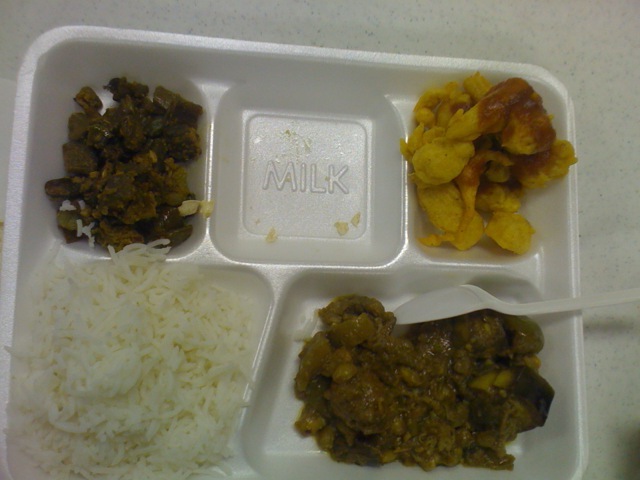
Styrofoam lunch tray, with special 'MILK' compartment

Jina is traveling and visiting a Jain temple in Atlanta. She there saw these plates for lunch (the same ones as in the Milpitas temple). The first thing is of course the environmental impact of using disposable styrofoam trays instead of washable plates, but what is also remarkable is that these trays have a specific section labeled “MILK”. Click on the image to see a larger version. I guess these are trays of school lunches. Just make sure you don’t forget to get your milk. Of course we can hope that someone meant Soy Milk or Almond Milk, but that might be wishful thinking.
Posted by Christian

Putting my money where my mouth is

Last year at the San Francisco Veg Festival I found a vegan (ie non-leather) wallet. I had been looking in many stores in Europe and the US, and hadn’t found a wallet I liked. The one I got at the Veg Festival has been great, and I like the idea of putting my money where my mouth is. We’ll be visiting the Veg Festival this year on Sunday. Leave a comment, or contact us @veganjains on Twitter, if you’ll be there and we can meet.
Posted by Christian.

Vegan for Das Laxan

For the Digambar Jain festival of Das Laxan, my parents have been going to the temple and listening to lectures on the qualities of forgiveness, humility, straighforwardness, contentment, truth, self-restraint, penance, renunciation, non-attachment and brahmacharya.  How wonderful, that in keeping with the spirit of Das Laxan, my dad has gone vegan! How wonderful to allow the cows some peace of mind and freedom from artifical insemination and how wonderful that he practiced self-restraint, straightforwardness, non-attachment,  and renunciation in keeping away from some of the foods he habitually eats. He had already been avoiding many fatty dairy containing foods such as butter, ghee and buttermilk, and the traditional Gujarati food that my parents enjoy at home is largely vegan. Continue reading

Soy Yogurt Kadhi


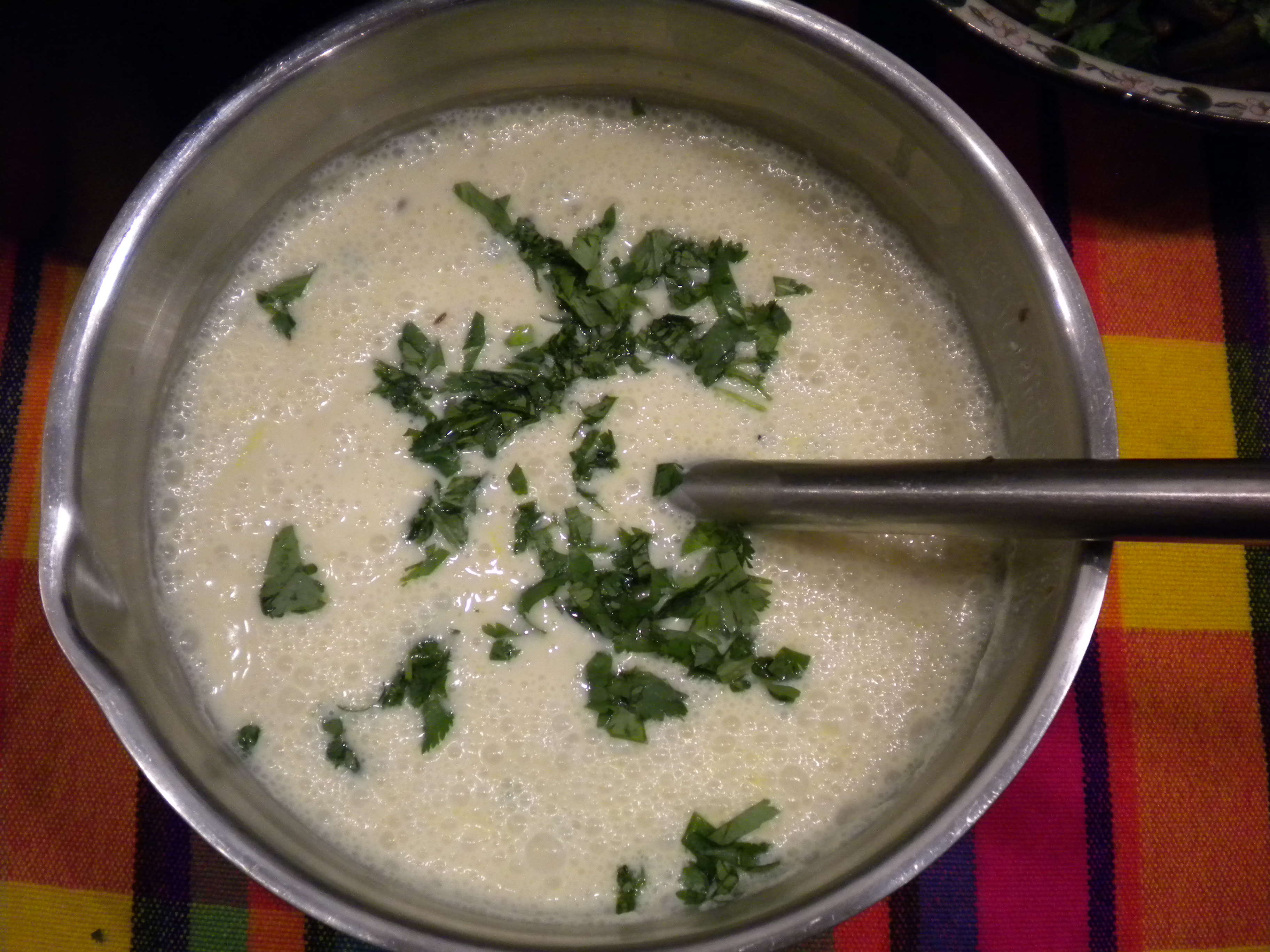
Soy Yogurt Kadhi
 Features: Soy yogurt in place of dairy yogurt to accompany khichdi.
Continue reading

California Quinoa Khichdi

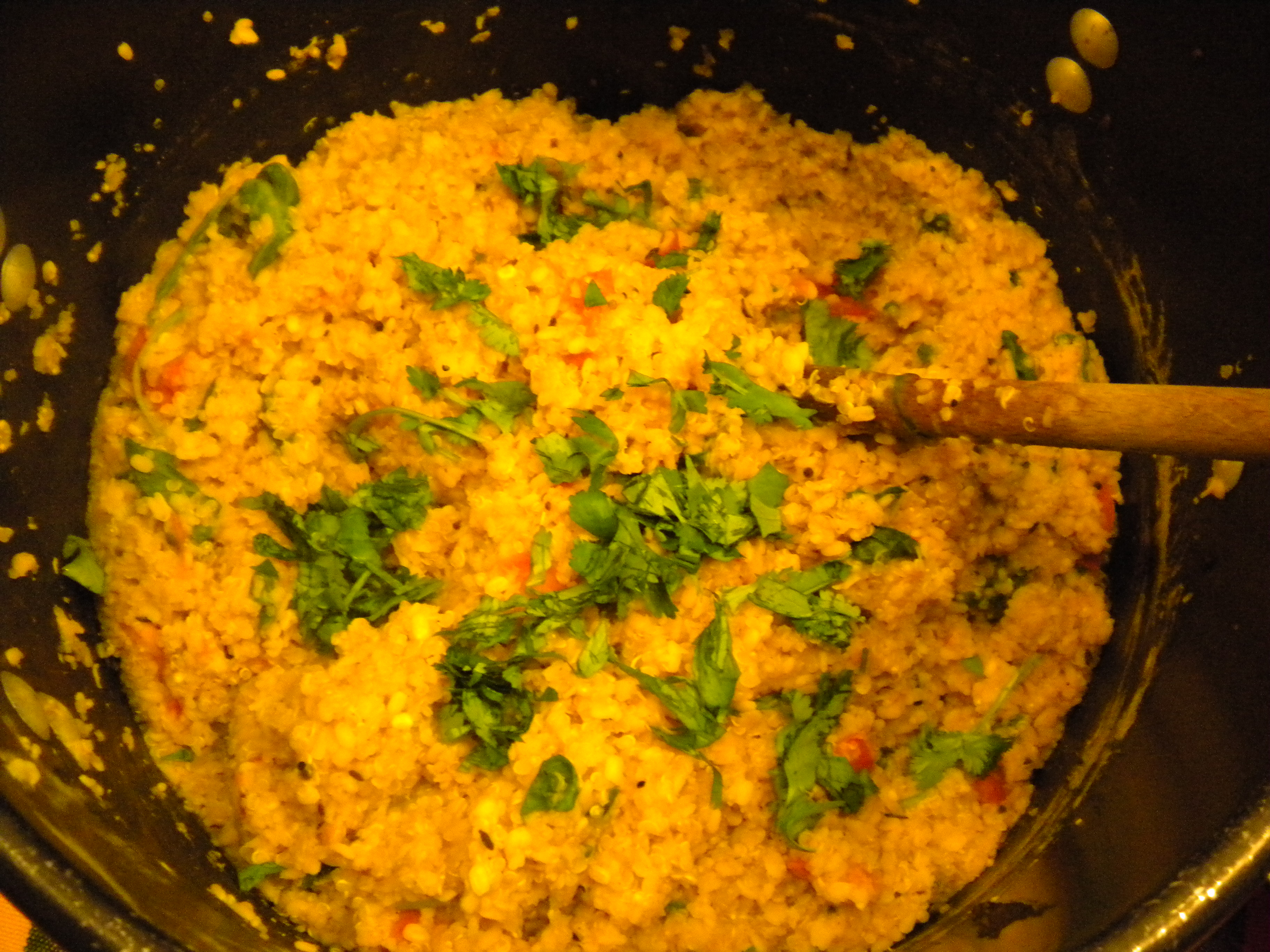
California Quinoa Khichdi

Features: Low glycemic index, with protein rich quinoa and mung beans, calcium and iron rich greens, and Indian home/comfort food taste! 

Continue reading

Fasting and veganism

How can people fast for weeks and months without food, and only water?  Jains have a tradition of fasting, from the one day fast that I observed yesterday, to the 8 day fasts that many are doing during paryushan, to the 32 day fast that one high-powered business person is doing in Boston, to the many months that some extraordinary sadhus and sadvhis and exceptional laypersons fast. Since modern medicine doesn’t have an answer to how people can fast for long periods of time,  we are left to conclude that the body must have some adaptive processes of which we are not aware.  Still, at some point, we all need to eat. If we can learn, from fasts or otherwise, to control our cravings and get away from a deficiency mentality, it may be easier to transform our usual diet, avoid dairy productsand eggs, and go vegan to more fully realize our ideal of ahimsa.