Category Archives: Uncategorized

Valuing Life

Today I happened to turn on public television to a documentary about  farming in California.

Being immersed in a micro-culture with many friends that oppose GMO, factory farming and chemical pesticides,  I was surprised to hear the host express how great is it that we have chemical fertilizers that improve productivity of crops, that we have established a way to fatten up cows fast to feed the global appetite for beef, etc. I think eventually the tone changed, but he was eating beef while discussing animal agriculture. Having travelled to India and other poor countries and knowing about the poverty even in what is called food deserts in the US, I was appalled that the show featured a town in which CA surplus tomatos were thrown around in a food fight that was framed as a cancer benefit. People paid $10 a person to throw tomatos at each other. Even if there was a cause behind it, it seemed obscene to be wasting plant life like that. And then the show cut to a slaughterhouse scene– as if it were all OK!

Next show was “Half the Sky”. There was plenty to be inspired by,but there was unspeakable violence to women depicted in Sierra Leone, India, Cambodia and Kenya, among other countries. Women raped, beaten, sold to be prostituted and killed. (There are parallels to the way that dairy cows are treated, which we could well consider in terms of karmic consequences). Economic opportunities, education and health care provide a way out, but there are tremendous violent forces that profit from women’s pain.  The message of the documentary is that things can change, if we all  contribute our energy, in some way.

As people that believe in the value of all life, (as vegans, as Jains)  do we really live our principles? Do we  treat the smallest sentient being with care? Do we consciously avoid eating products of violence of 5 sensed beings? Do we respect and encourage girls and women to their highest spiritual evolution?

Or are we stuck mindlessly reproducing cultural patterns that numb us and devalue life?  We might be vegetarian, but don’t want to think beyond that and become vegan. We might avoid killing the insects, but drive an SUV. We might want our daughter to get educated but we tell her that according to the Digambars, women cannot be liberated. Are we living and giving to the world the values that we profess?
Special re-post for Paryushan: Are eggs vegetarian?

Sagar Kirit Shah, an economist from London, reflects on his experiences with eating eggs and argues why vegetarians who do not wish to kill animals should not eat eggs.

Image

The question of whether eggs are suitable for vegetarians is one which most vegetarians living in the UK will have encountered at one point in their lives.  And from the perspective of a young person of an Indian cultural heritage, it is a very confusing one.  In India, the norm is that eggs are not vegetarian – if you see the words “pure veg” on an Indian product or at an Indian restaurant, you can generally be sure that there will be no eggs.  But in the UK, the official definition of a vegetarian, as set out by theVegetarian Society, permits the consumption of eggs.  As a result, products containing eggs are normally labelled as vegetarian in supermarkets and restaurants in the UK, to the dismay of many Indian vegetarians.

Even though I’ve been a proud “vegetarian” for as long as I can remember, I’ve been confused about what I think about eggs for most of my life, and have switched between shamelessly enjoying them and trying to avoid them.  I think many young people from the Jain community in the West have faced a similar internal conflict.  Having carefully considered the issue, I now believe that those of us who are vegetarian because we think it is wrong to kill animals for food should not eat eggs, regardless of whether the eggs are free range and/or organic.  In this article, I share my experiences of eating eggs and explain why I adopt the position that I do.


Continue reading

Happy 90th Birthday Gurudev Chitrabhanu

Today is the 90th birthday of one of the two Jain monks that brought Jainism to America. Gurudev has been instrumental in creating the environment that enabled Jains from India, such as my parents, their children born in the US, such as me, and Americans interested in Jainism, such as friends at the Jain Meditation International and Lighthouse Centers, to understand and practice this ancient  tradition with its timeless principle of ahimsa.

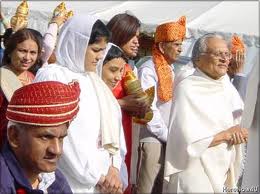
He is pictured  on the far right at one of the Pratishtas ( temple openings) that he attended.

Image

Gurudev Chitrabhanu came to the US in 1971. I was one year old. As he travelled and authored books, founded Jain Meditation International and spoke to audiences, my parents and their friends founded the Jain Society of Chicago. He helped organize the association of Jain associations  called JAINA.   He wrote books prolifically, and my  mother bought them, kept them in our temple and as she prayed, I read them voraciously.   I grew up reading “Inspiring Anecdotes”, ” A Lotus Blooms” and later, his books about Jain meditation. I heard Gurudev speak at Jain centers and JAINA conferences. And then when I was 20, I went to Siddhachalam, the Jain ashram founded by Acharya Sushilmuniji, the other Jain monk that brought Jainism to America. I became vegan after attending a New Jersey Animal Rights Alliance Conference there. As I, along with  a cohort of Jains in my generation, went vegan, we were reassured that Gurudev and Pramodaben understood and promoted veganism, or pure vegetarianism to our Jain community. They have spoken about the need to remove dairy products from our rituals and our diets, eloquently and persistently.

There has been a remarkable resistance to giving up dairy. Some Jains argue that veganism is a religion separate from Jainism and that Mahavir was not vegan. Despite criticism, Gurudev, with the spiritual understanding borne of 5 years of silence with monks’ vows and a lifetime of practice, maintains the clarity of his message: Ahimsa Paramo Dharma. Non-violence is the supreme religion. Veganism is but one expression. One cannot consume milk and consider oneself a pure vegetarian, practicing ahimsa.

And his reply, as Pravin K. Shah wrote recently, to the question of how to respond to people that oppose veganism, continues to inspire me. These are lines from the song that he authored  Maitri Bhavana Pavitra Zharanu :

May I always be there to show the path  

To the pathless wanderers of life

Yet, if they should not hearken to me,

May I bide in patience.

Thanksgiving Reflections

Last year, I posted a Vegan Thanksgiving Prayer. This year, I came across a post on another blog, Happy Healthy Long Life, which is all about gratitude for the wonderful things and people in our lives. In Jainism we are very careful not to harm and our rituals seem to emphasize beneficial regret and asking forgiveness.  My Thanksgiving prayer typifies our Jain sensibility. In a complementary way, gratitude can bring a positive aspect to our care for other beings.

Incidentally, the writer of Happy Healthy Long Life has a scientific and health focus, but recently she wrote about how it felt to learn about the way that dairy cows were treated. I found it refreshing that she discussed the compassion aspect of a diet that she found initially for health reasons.

Farm Sanctuary has a live stream on Thanksgiving of rescued turkeys at their New York Sanctuary (go to farmsanctuary.org from 9am to 4pm). Turkeys are surprisingly cute and friendly as we found out last week when we visited Harvest Home Sanctuary.

I am grateful, dear readers, that you chose to read this blog and that i have a venue for expressing these thoughts. May your holiday be full of joy and compassion.

Have a very happy Thanksgiving.

A Diwali gift from PCRM: Vegan Kickstart for India!

OK, PCRM didn’t really time this for Diwali, our holiday celebrating the Nirvana of Mahavir Swami Tirthankar this Wednesday. But how nice that we have a 21 day program complete with Indian menus and a Kickstart program set for early November! Spread the word and check it out here.

Dr. Barnard gave a very nice, positive talk at JAINA last July which we have been meaning to post up.  One point that he made very well is how tastes can change;  many of the uncles and antis could identify with the way they are now able to enjoy fat free or low fat milk, when they used to like only full fat milk; similarly, tastes can change to enjoy even healthier soy, almond, rice and other types of non-dairy milks.

For those who follow a traditional Jain diet, the recipes on the Kickstart menu can be easily modified to eliminate root vegetables.  Just remember the 5 sensed beings that are harmed in our traditional dairy based diet and consider all the compassion you are showing by sparing the cows that suffering!

Happy Diwali, may the light of knowledge guide us towards enlightened action.

Green juice

Passed down from a nutritionally minded MD to patient, to friend, to cousin is the following healthy drink recipe

Green  Juice!

– 2 cups of Kale
– ¼ cup of Spinach
– ¼ cup of Coriander (Cilantro)
– ½ Beet
– 1 stalk Celery – optional
– ½ Carrot – optional
– 5 or 6 seeded Grapes – optional
– ½ Apple – optional

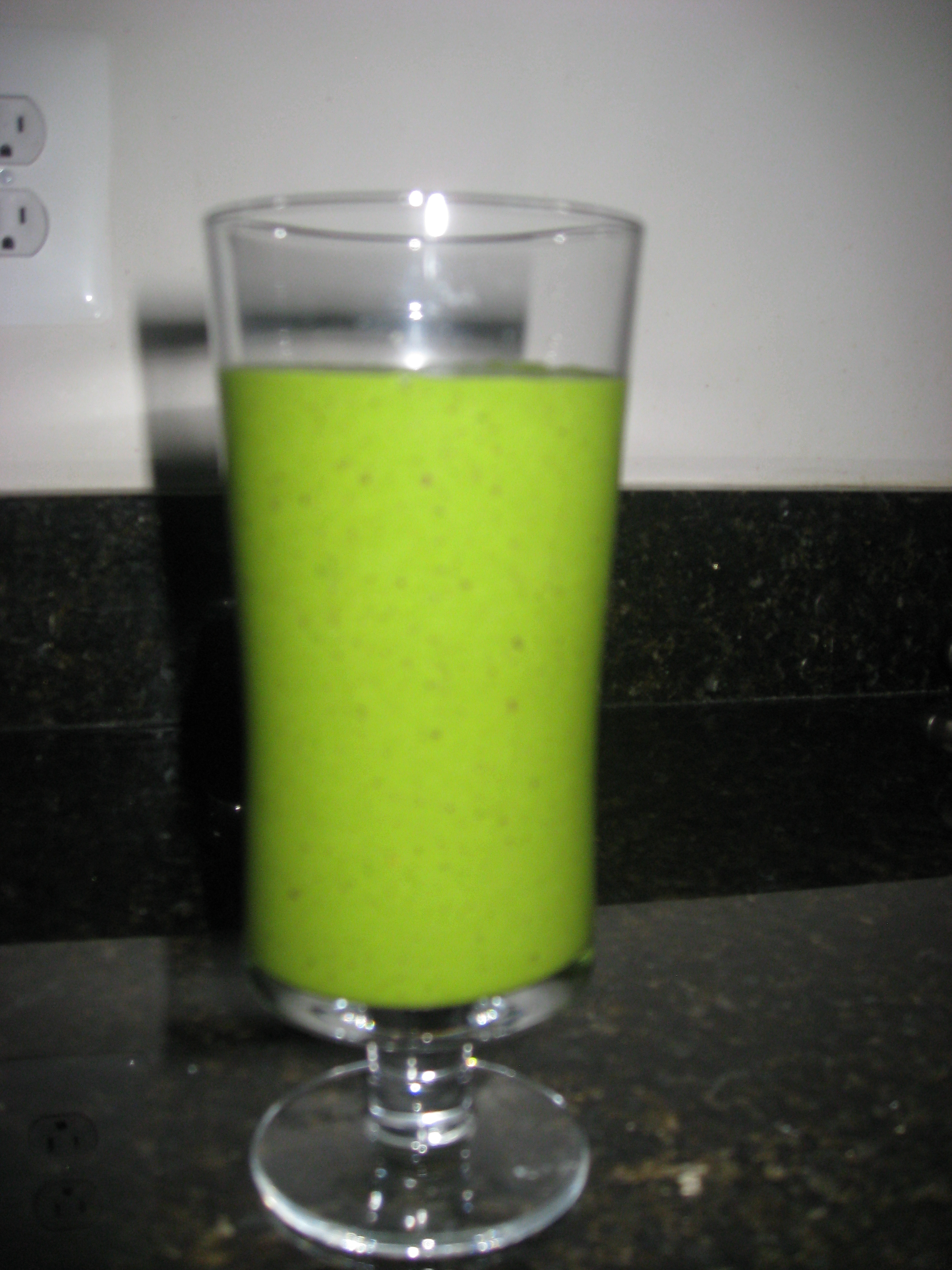
The juice below is  red, because of the beets. She uses a Blendtech, but Christian is loyal to his Vitamix and I think you can use a lower-tech blender too.Veggie juice Continue reading

Uncolonize our drinks: Beyond milk-based chai

One of the hardest things for our uncles and antis give up as they consider veganism is masala chai. They consider it quintessentially Indian, typically Gujarati, and essential for their daily energy and joy.  Amman, a vegan Jain studying at UC Berkeley, reminds us, however, that it was the British that served and encouraged Indians to drink milk based chai.  Check out this wikipedia description: while the masala part came from a traditional Ayurvedic origin, in keeping with the drinking of tea as an herbal medicine rather than a recreational beverage, the British encouraged the wide scale cultivation of tea in India and promoted it ” in the English mode” with small amounts of added milk and sugar. Vendors added spices and milk, and established it as a popular beverage.
During Jain events, if we need to stick to chai to avoid challenging traditional tastes, let’s use almond milk, soy milk, rice milk or anything but dairy.

But really, let’s not kid ourselves. This is neither a healthy habit, nor a quintessential part of our Indian identity. It’s an addiction that we learned from the British Raj.

Still if Chai is your comfort drink, and if you want to keep drinking it, the cows won’t be hurt if you buy or make a plant milk. You can try Richa’s recipe for vegan chai here.

Jeffrey Masson talking about pets and veganism

Go Vegan Radio interview

I had the pleasure of speaking with Bob Linden on his radio show last week for an interview. Click here  for my interview and other archived shows.

Guest Chef Menu at Frugal Foodies

I was the Guest Chef at the last Frugal Foodies hosted by our friend Moses in his Berkeley home Dec 21.  How I became a Guest Chef is less related to any culinary expertise as  to my frequent attendance at previous Frugal Foodies and my voicing menu ideas enough to Moses that he requested that I put a menu together.

My emphasis is usually healthy vegan recipes with calcium rich veggies and avoiding root vegetables, not necessarily for all the traditional Jain reasons, but to emphasize other flavors. I feel that all too often, the easy way to spice up food is putting in onions and garlic. I ended up using fennel in the spanakopita, which is also a root, but celery could be  used too. And i used asafoetida, which family members later told me  has recently been exposed as containing some other animal component from horses’ hooves!  I can’t find any information about this on the web. But if it is true, I’d rather choose to season with (one-sensed) root vegatables such as onions and garlic than something that hurts horses, who are 5 sensed animals.

 I made a few mistakes this time in modifying recipes and the result was a salty vegan Spanokopita. But people ate them anyway. What I’m posting here are the corrected recipes for the entire menu.

1) Puda/pudla: Christian posted this recipe earlier. People enjoyed making this.

2) Collard greens/butternut squash stir-fry

3) Spanakopita

4)Chocolate chai spice shortbread cookies

5) Millet pulao

6) Cucumber Raita

These are going up in  separate posts, some with pictures, next!