Category Archives: Environmental

On the Plight of Cows in India- our fond memories of the Indian family cow are outdated

My friend Dr. Tushar, a family doctor in Canada,  organizes a wonderful volunteer opportunity to teach school children about health issues in rural Gujarat, as part of the Bidada health camp. He recently reached out with an email regarding the plight of Indian cows.

I volunteered with him in 2008 and remember visiting a panjra-pol at that time, and talked with the caretaker who informed me sadly that the capacity of the panjra-pol was limited, and that ultimately many of the cows had to be sold to slaughter.
Dr. Tushar’s post  follows:
 India has the highest population of cows in the world, over 280 million (or 28 crores).  This is a massive number.  Now here are a few facts.  A cow in India can live for around 23 years.  She starts producing milk at the age of around 4, and milk production lowers down at the age of around 12.  Each year, as our slave, she must be forced to become pregnant and have a baby, which is taken away by force.  Most cows are now brought up in very crowded conditions, and the percentage in humane conditions is becoming the exception rather than the norm.  These cramped places are out of the public eye, because businesses do not want people to see what goes on there.

Confusing Vegan and Environmental Messages at JAINA 2011

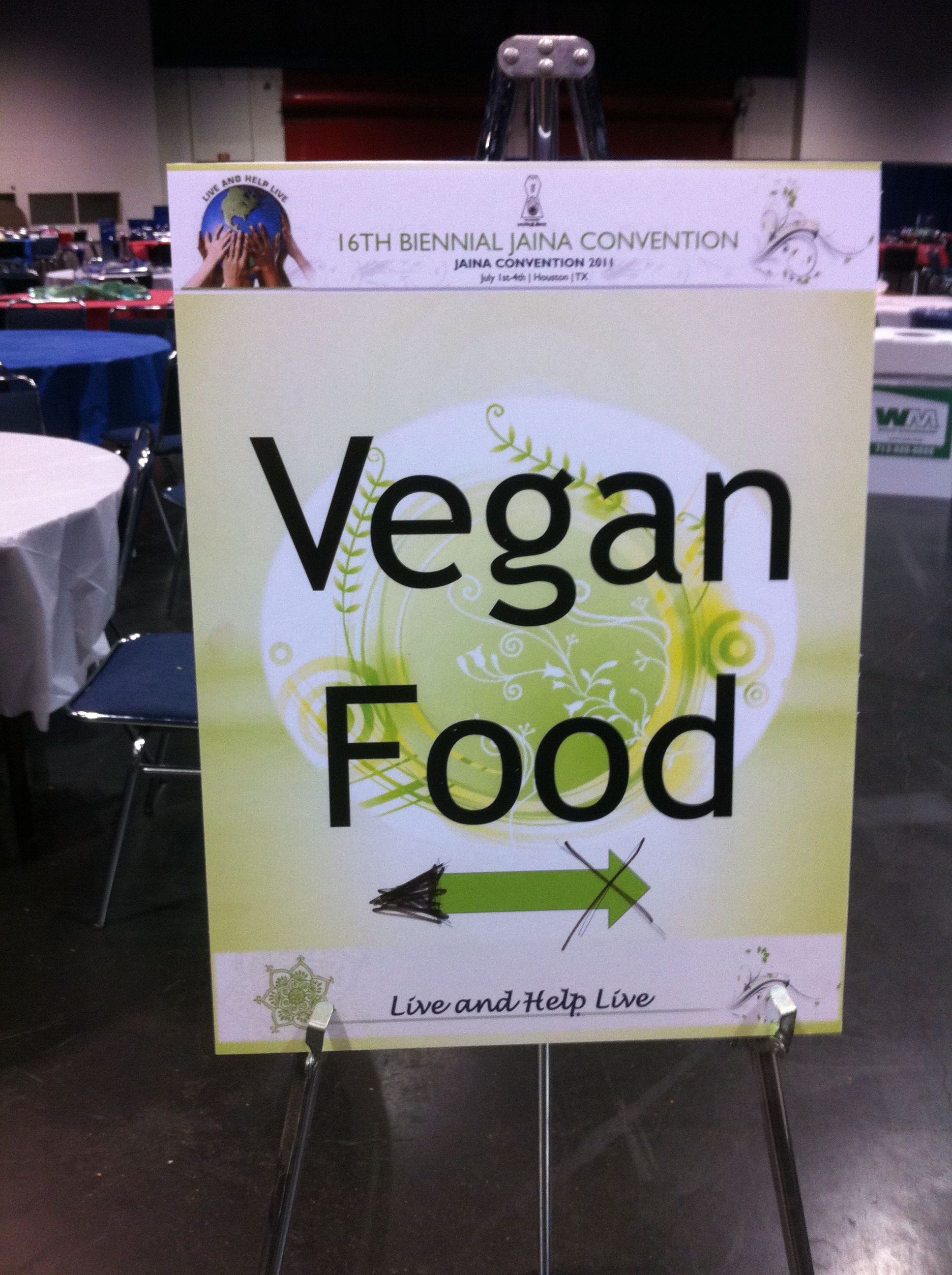
Despite the support of many Jain leaders and JAINA convention attendees, there was no clear response to our call for on all vegan menu. At one point, we heard there would be one all vegan day, then a few all vegan meals. An email came out to all attendees prior to the convention regarding the need to sign up for vegan meals, and letting them know to register. I emailed back to suggest that since they had invited vegan speakers, and people may be convinced to try vegan items, to have some excess capacity. But there was no reply, and at the actual event, several people who were persuaded by talks such as Prof Gary Francione’s, and Dr. Neal Barnard’s were turned away from the vegan line. Unfortunately, for those of us who did sign up before the convention, it was difficult  to ascertain what was vegan even in the vegan lines.The volunteers had a lot to handle at this convention and this is not intended to downplay their efforts, but it was very disappointing that they didn’t know what was vegan, and I think the the convention leaders could have been more clear,so that the meals and the message of the talks could have been consistent.
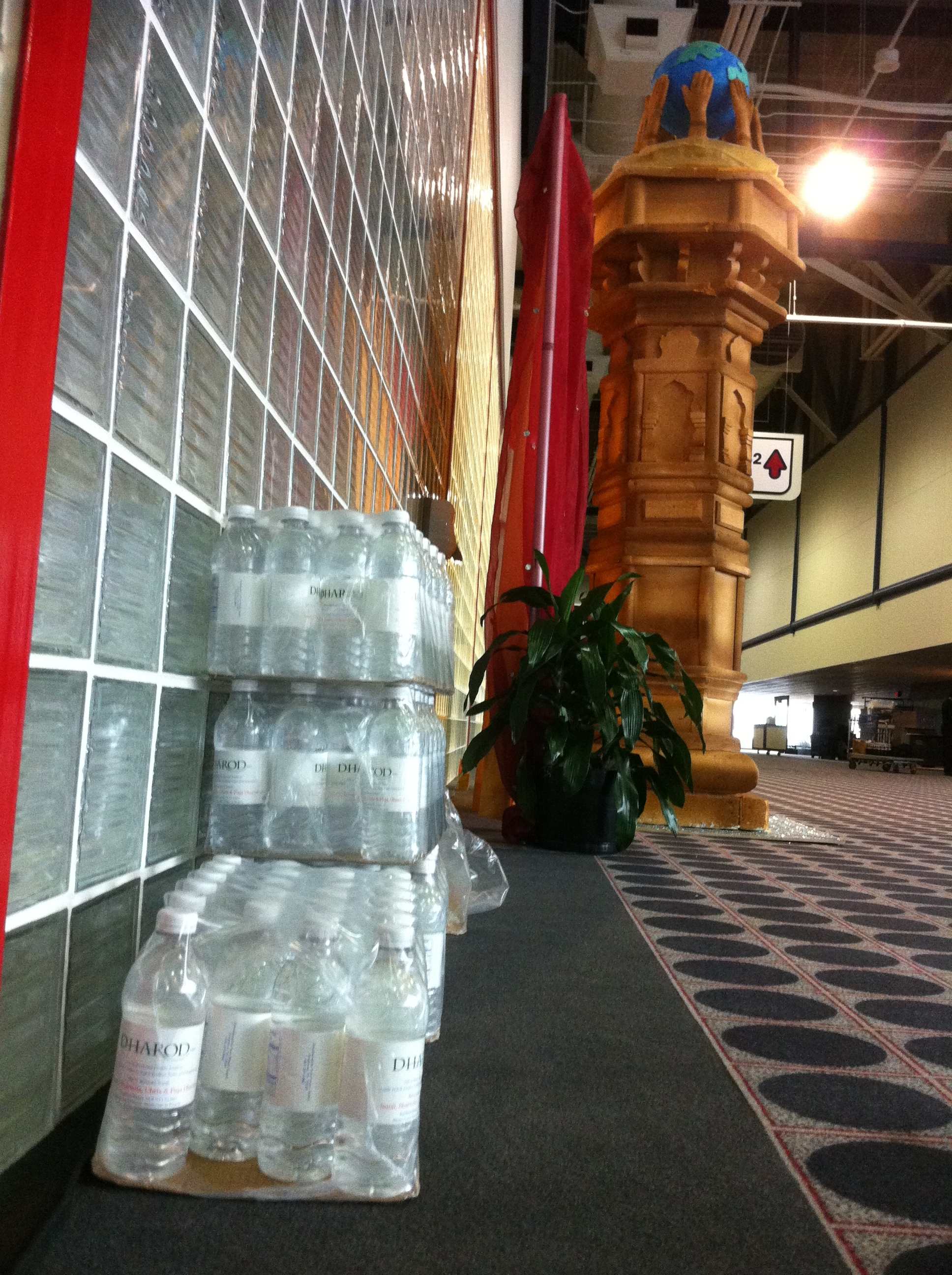
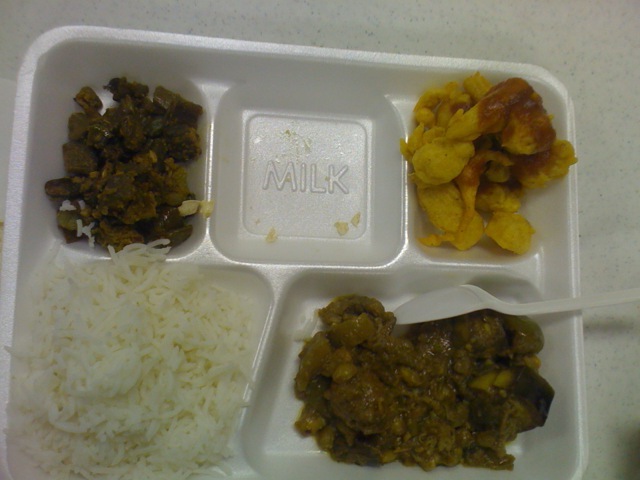
Another disappointing vision was the ubiquity of plastic water bottles, which, even if recycled, create unnecessary environmental resource use, and in many cases were not recycled. Also, as seems to be the norm for JAIN events, there was  egregious use of styrofoam plates with a milk compartment used to serve meals(as pictured on a previous post here about the Jain Center of GA). If we as a community are doing so well financially and hold ahimsa so dear to our ideals, why can’t we figure out a way to replace styrofoam with washable or at least compostable or biodegradable alternatives?

We did appreciate the efforts of Asha Jain to make the meals healthier and all the volunteers’ work. We certainly did not leave hungry or thirsty. Bringing our own water bottles and food containers to the conventions, we participated in the events, without generating so much waste (washing our plates with Dr. Bronner’s soap in the hotel room and reused them for each meal). We met friends and family and had a nice time at the convention.
We will post some of the talks on this site this week to inspire or reinspire our readers!

Green Jainism! Taking inspiration from our sister traditions…

At the JCNC 10th Anniversary celebrations a couple of Jain leaders expressed their intention to change the food served at the next JAINA convention to become vegan. They didn’t addressing the styrofoam issue. Both aspects would enable us to realize our practice of ahimsa. Communities from our sister traditions of Hinduism and Buddhism provide some inspiration. Continue reading

Milk and Styrofoam

Styrofoam lunch tray, with special 'MILK' compartment

Jina is traveling and visiting a Jain temple in Atlanta. She there saw these plates for lunch (the same ones as in the Milpitas temple). The first thing is of course the environmental impact of using disposable styrofoam trays instead of washable plates, but what is also remarkable is that these trays have a specific section labeled “MILK”. Click on the image to see a larger version. I guess these are trays of school lunches. Just make sure you don’t forget to get your milk. Of course we can hope that someone meant Soy Milk or Almond Milk, but that might be wishful thinking.
Posted by Christian